We handle it end to end
Miami-Dade DERM, Municipality, USACE and FDEP dredge permitting — survey, drawings, application, agency correspondence, turbidity monitoring and close-out.
Permits are the reason most dredge projects stall.
Dredging in Florida waters touches more than one agency, and each of them wants the same information presented its own way. Owners who try to run it themselves usually lose a season to revision cycles.
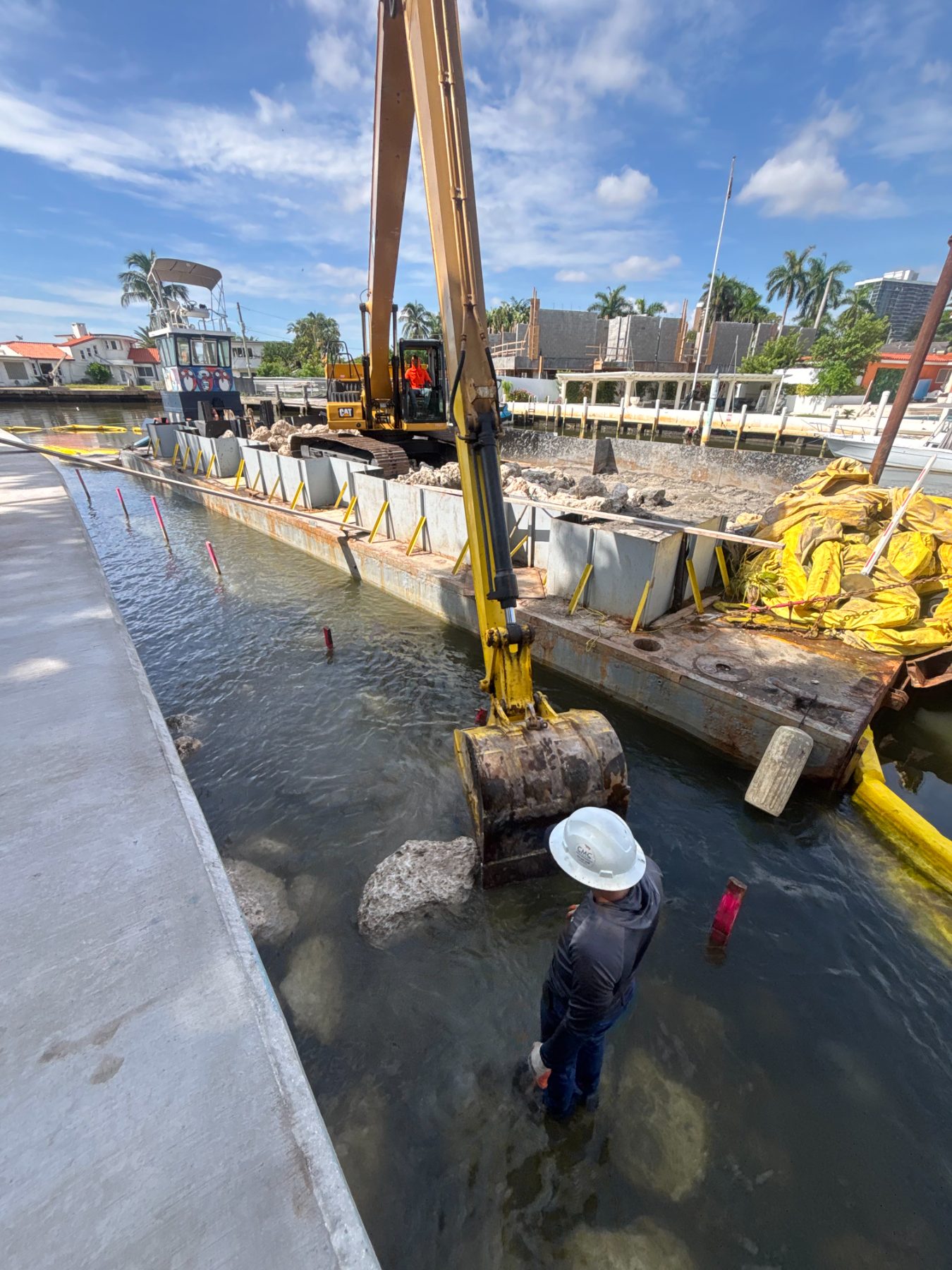
We do this as part of the job, not as an add-on. Survey data goes straight into the drawings, the drawings go into the application, and the application is written by the people who will actually be running the excavator — so what gets permitted is what gets built.
If you already have permits in hand, we’ll work to them. If you have a consultant, we’ll coordinate. If you have nothing but a shallow slip, start here.
Survey & scope
Bathymetric survey of the slip, quantity take-off, and the proposed cut modelled in Dredgemagic.
Drawings & application
Plan and section drawings, disposal plan, turbidity monitoring plan, and the filings themselves — federal, state and county.
Review & response
We carry the correspondence and answer requests for additional information so the file keeps moving.
Compliance & close-out
Monitoring during the cut, post-dredge survey against the permitted depth, and the as-built record for your file.
DERM is the one that decides whether you dredge.
In Miami-Dade, dredging in tidal water is regulated by the Division of Environmental Resources Management — DERM — under Chapter 24 of the county code. Practically everything below the mean high water line in Biscayne Bay, the Miami River and the residential canal systems needs a DERM Class I permit before a bucket goes in the water.
DERM is also the local reviewer that other agencies wait on. Because much of the county sits inside the Biscayne Bay Aquatic Preserve, a dredge application usually needs a benthic resource survey — seagrass and hardbottom — before it will be accepted, and the cut line often gets shaped around what that survey finds. Getting the survey right the first time is the single biggest schedule saver on a Miami dredge job.
Work in non-tidal, county-controlled canals falls under a different DERM class, and dewatering or upland handling of spoil can pull in its own approval. We sort out which permits your specific slip actually needs before you spend money on drawings.
Miami-Dade DERM — Class I
Dredging, docks, seawalls and any structure in, on or over tidal water and bay bottom. Chapter 24. Includes turbidity limits and monitoring conditions we have to work to on site.
USACE — Jacksonville District
Section 10 authorization for work in navigable water and Section 404 for discharge of dredged material. Runs in parallel with the state and county files.
FDEP — ERP + submerged lands
Environmental Resource Permit plus, where the cut crosses state-owned bottom, authorization to use sovereign submerged lands.
Broward County
Broward runs its own environmental review for work in tidal water instead of DERM, alongside the same federal and state filings. We work both counties, so the process doesn’t change for you.
Your city
Miami, Miami Beach, Coral Gables, Key Biscayne, North Miami, Aventura, Fort Lauderdale, Hollywood and the villages each add their own building or shoreline review on top.
What owners ask us first
Do I need a DERM permit to dredge behind my house?
If the water is tidal — and in Miami-Dade it almost always is — yes. A Class I permit is the starting point, even for a small spot dredge.
How long does DERM dredge permitting take?
Months, not weeks, and it depends on the resource survey and how clean the first submittal is. Start before the season you want to use the boat.
What if there’s seagrass in front of my dock?
It doesn’t automatically kill the job. It changes where the cut can go, and it may bring mitigation into the conversation. The survey tells us early.
Can you dredge deeper than my neighbours?
Permitted depth is generally tied to the adjacent natural bottom and channel depth, not to what you’d like. We tell you what’s realistic up front.
I already have an expired permit — can it be renewed?
Often, and it’s usually faster than starting over. Send us what you have and we’ll tell you whether it’s worth reviving.
Do you do permit-only work?
We’d rather permit what we’re going to build, but we’ll talk it through. If you already have a consultant, we coordinate with them.
Deepen your slip, dock, waterfront, or berth.
Call us or send an inquiry. Tell us roughly how shallow it is and how soon you need it usable — we’ll tell you what it takes.
Miami, FL 33136